Model Trains
Several years ago, I discovered a book titled Maiden Railway (jp. Tetsudo-Shojo Manga) in graphic novel section at my local public library. At the time, trains, especially Japanese ones, weren’t on my radar. Nevertheless, the title was intriguing, and its unique, watercolor-esque cover was even more captivating. I retrieved the book, glanced over its contents, and within a few pages, I was engrossed by the art style and narrative. I brought it home and read through the entire volume. To this day, I still recall one scene where a woman’s husband went to a bakery every Thursday after work, leading her to suspect infidelity. It turned out his visits weren’t for secret rendezvous with a cashier; rather, he frequented a model train venue hidden in the back of the shop. This scene left a lasting impression on me, marking my first encounter with the world of mokei-tetsu (i.e., model train fans). Years later, I had the opportunity to delve deeper into that fascinating realm.
My exploration of Japanese railway culture has largely been a series of spontaneous, last-minute adventures, or “side quests,” as some might call them. My trip to the Hara Railway Museum was no exception. Having unexpectedly missed my planned Hachioji day trip one Monday morning, my mind spontaneously turned to the Keihin Tohoku Line, which travels along the coast to Ofuna. Situated on the second floor of the Mitsui Building near Yokohama Station, the museum was small yet far from unassuming, as one can see their prominent sign yards away from the building. The first things to capture my attention were the large, meticulously detailed train models displayed behind glass containers. As someone whose artistic skills are close to desperation, I found each model incredibly impressive. More to that, every train had a personal connection to Nobutaro Hara himself. The captions accompanying the models highlighted not only the significance of the original trains in Japan but also their personal relevance to the collector. In this way, the collection is curated to present Hara’s personal journey through the world of model trains. From his first engine car, crafted from metal scrap, to working cars powered by overhead lines, it felt as though the trains were an extension of him, growing in detail and sophistication as he aged and matured. The genuine passion channeled through this carefully assembled collection was palpable, especially since many of the trains were personally built by Hara.
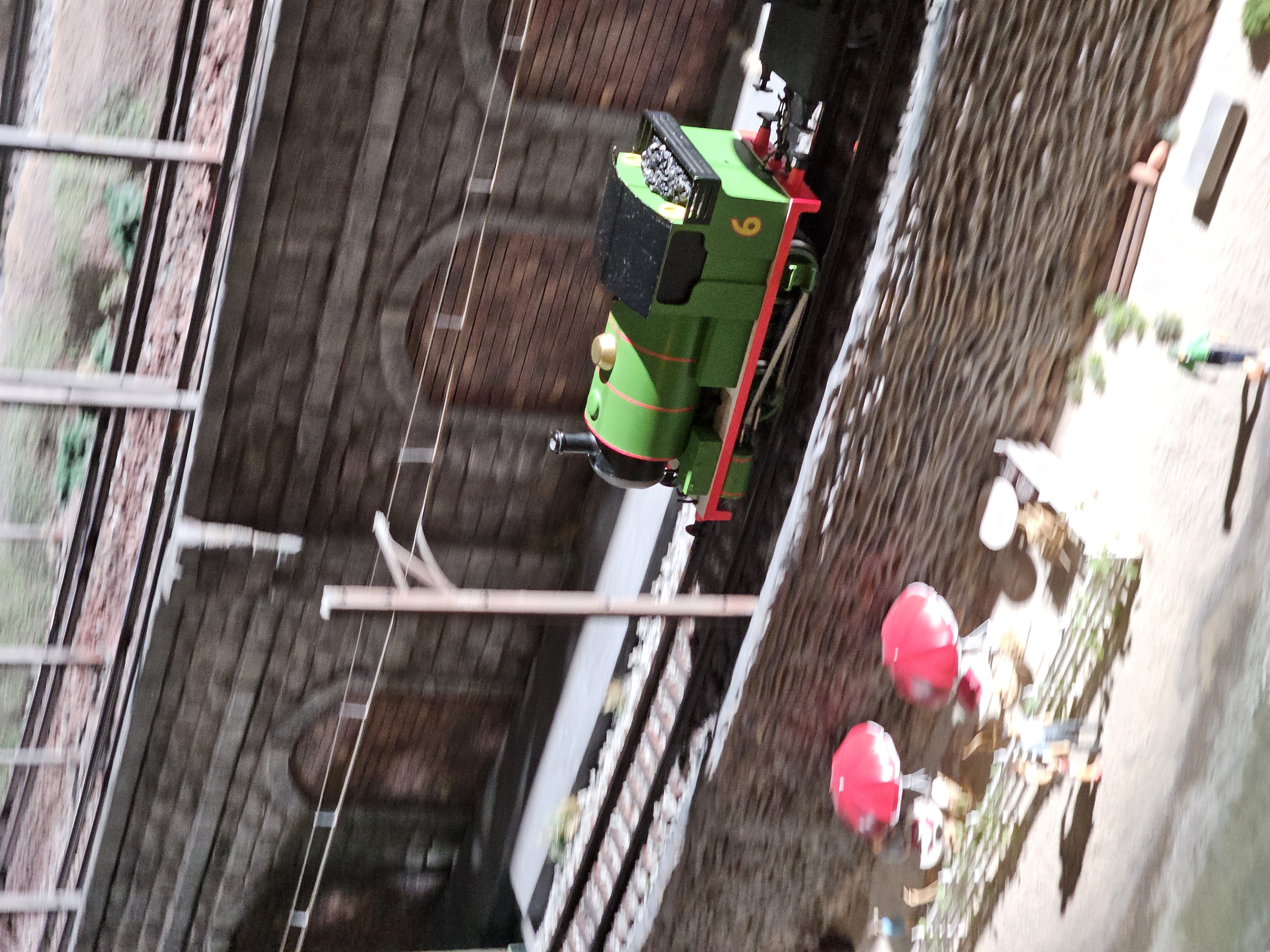
The greatest surprise, however, was the diorama near the end of the exhibition, called “Ichiban Tetsumo Park” (No. 1 Train Model Park). It stood out significantly from other dioramas I had seen because its setting wasn’t exclusively Japanese. It resembles a fictional world blending a mountainous town with European-style architecture, a coastline, electrified trains, steam locomotives, a train turntable, and a roundhouse. A museum staff member operated one of the trains from a control panel on the left side of the diorama, while live view from the train’s perspective is displayed on the TV above the panel. A touching detail was how other staff members would wave at the passing train, as if it were a real one in operation.
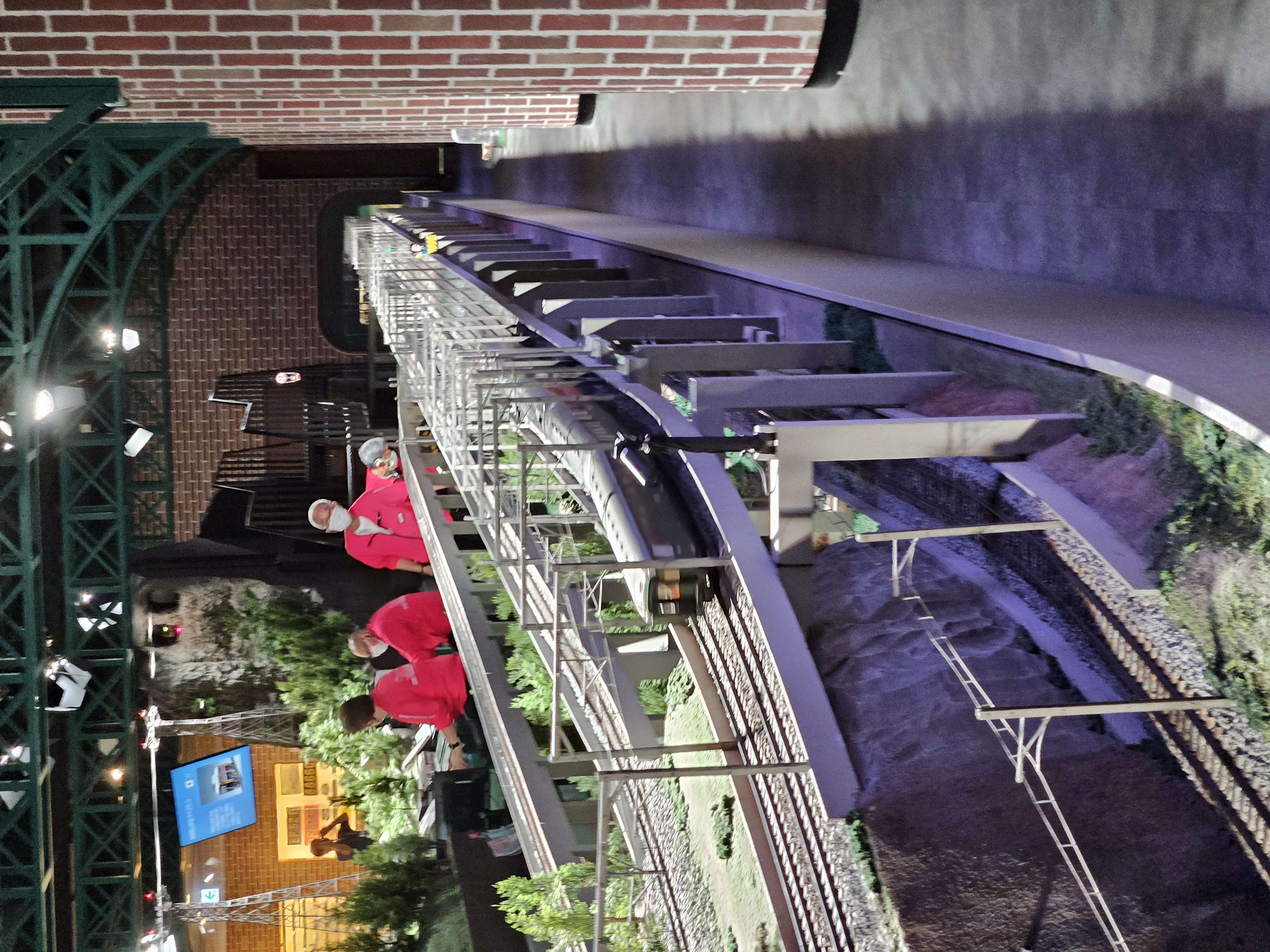
To me, it felt like a dream, and perhaps that is precisely what train modeling is about: crafting one’s dreams into reality. This unique beauty of train culture lies in its ability to blend one of the world’s most sophisticated technological advancements, which propelled human forward, with the boundless scope of individual imagination.